Category Archives: Non-fiction

Inspired by non-fiction

A snippet of the cover of the book Mindset, by Dr. Carol S. Dweck. Showing the title, the author's name and the subtitle "Changing the way you think to fulfil your potential".

Mindset

I started reading Mindset by Carol Dweck fully convinced that I had a growth mindset. She shattered my conviction in the first few pages of the book. There indeed things for which I feel that putting in the effort will allow both myself and others to get better. It turns out that there are also many things for which I have a fixed mindset and In those areas, I believe that I lack an innate talent required to ever be any good at it.

An example of something I have (Had? Not yet, but I’m working on it.) a fixed mindset about is being able to play music. I’ve tried to learn to play the guitar in my teens and I was never any good at it. I had lessons and practiced, but never with a solid expectation that I would get good. I was always insecure because I saw others who were much better. I was a lighting engineer at the time and compared myself to the people I saw play on the stage. I stopped playing after a couple of years and didn’t touch another instrument until I was tempted into trying to learn to play the piano a year ago.

A fixed mindset means that you believe that your qualities and those of others are carved in stone. That you have a certain amount of talent and that you’ll have to make do with that.
With a growth mindset, you believe that you can cultivate and improve your qualities through effort, practice, and help from others. This doesn’t mean you believe that anyone can become Einstein or Van Gogh or Tim Minchin. It means that you believe that you can improve compared to your own starting point. How far you can improve depends on many factors and in some cases talent is one of them.

It turns out that your mindset has a profound impact on the way you lead your life. If you have a fixed mindset it’s hard to try something new. After all, if you fail it means you’re no good at it and might as well give up straight away. Asking for help is hard because it means admitting to failure and deficiency.
A growth mindset can develop a passion for learning. Trying something new can be seen as a challenge and failing is a chance to learn and improve. Instead of hiding deficiencies, someone with a growth mindset will focus on overcoming them.
It’s easy to see how having a different mindset can significantly change the way you live your life.

Like almost everything else, our mindsets can also be changed and developed. This can be worked on from the inside but is also influenced by external sources. The most direct way to influence someone’s mindset is through praise and criticism.
Dweck explains that praise should be given for effort, trying different strategies and asking for help when needed, not for result (or speed). If you praise a kid because it read a book or got a good mark in school by telling it how smart it is you are suggesting that it’s an innate quality that allowed it to succeed. The kid might feel there’s no need to learn anymore because it’s already smart. If next time the mark ends up being much lower it might feel like a failure.

Be aware that it’s damaging to praise a kid for effort when the kid didn’t actually try hard or ask for help. If a kid fails because it didn’t put in enough effort it should be told so. In a kind and empathic way. A lazy, confused or insecure kid isn’t going to suddenly be motivated when it’s being belittled or threatened.
I’m using kids as an example because it’s easier to associate ideas and behavior around praise and learning with them, but it works exactly the same for us as adults.

In an experiment, two groups of people were being given a puzzle to resolve. One of the groups was given fixed mindset praise when completing it, the other group was being praised for the effort that they put in and the strategy that they used. When asked if they liked the next puzzle to be more difficult or similar to the first one, the group given fixed mindset praise overwhelmingly chose one that was similar to the first puzzle. Resolving the puzzle means you’re smart and failing to resolve a more difficult one might expose you as the fraud that you are.
The group that was praised for their effort was interested in the challenge of a more difficult puzzle.
This effect is visible regardless of the type of mindset that people had before the experiment started.

The impact of fixed mindset feedback is similar. When missing a shot while playing tennis you can get annoyed and tell yourself that you’re hopeless, or you can challenge yourself to stay loose on your feet and try and hit the next one better.
We don’t even need others to talk us out of a growth mindset and into a fixed one. Most of us are perfectly capable of doing it to ourselves. Having others confirm our fixed mindset will make it much harder to find a way out towards a growth mindset though.
If you want to get better at something try to find the motivation to put in time and effort and ask for help. Being brave enough to do this means we can grow in almost every area of our lives.

Carol Dweck is very open about coming to the insights she describes in Mindset through her research. She repeatedly talks about how she struggles to stay in a growth mindset herself in different areas of her life, despite having witnessed the evidence of the benefits first-hand. This is both a refreshing position for an author to take in their own book and it’s reassuring that even someone who wrote a book on the subject is still struggling to put the ideas into practice.
I feel that anyone can learn from this book. When read with an open mind it’s a strong dose of motivation and inspiration. Use it to your advantage.

I was inspired by this book. I have to admit that I feel inspired by many books and I’m not going to apologize for it. Reading books is a great way to grow and learn for me. While I struggle to get out of my fixed mindset when it comes to making music and art, I do have a growth mindset when it comes to improving my behavior and increasing my intellect.

You’ll have to excuse me now. I’m going to practice my piano playing!

An images showing two heads in profile. A blue one on the left has Growth Mindset and characteristics of it written in it. A grey one on the right has Fixed Mindset and some of its characteristics written in it.

The cover of the book #GIRLBOSS by Sophia Amoruso

#Girlboss – Advice about Life with a Touch of Rebellion

I’d never heard of Sophia Amoruso. That might be because I’ve been hiding under a rock, or it might be because I’m not the target audience of her successful webshop, Nasty Gal. I’m also not the target audience for her book, #Girlboss (hashtag included). The target audience of the book is young women (perhaps up to 30?) and girls. The target audience of the webshop is described on the site itself: “WE EXIST FOR THE “GIRL IN PROGRESS”. BADASS TO THE CORE, EVER-EVOLVING AND GROWING, STRIVING TO BE BETTER EVERY. DAMN. DAY. FLAWS ENCOURAGED.”. Caps included. I love growing and evolving, but I’ve always lacked in the badass department.

The book is about Sophia’s own journey from being completely broke and starting a little eBay shop selling vintage clothes to owning and running the multi-million dollar business that Nasty Gal is today. The book is filled with tips for girls who would like to start a company and become a “girlboss” too, but it also includes many tips on how to handle some of life’s challenges in general.
The book is a funny mix of stories about rebellion and an anti-establishment attitude and sensible and quite conservative advice.

In the book’s introduction, Sophia tells her readers to never grow up and to not become a bore. I failed miserably there and I wouldn’t change it for the world. Shortly after that inflammatory advice, Sophia explrds that are really credit cards and how forgetting about them can easily ruin your credit score, even if you only bought something small and cheap on them. She warns that you shouldn’t spend money that you don’t have. Nowadays this advice might not be uncontentious, but it’s very sensible!

Some of the advice and insights that speak to me (and admittedly make me feel righteous), as a manager of young people includes:

  • If you get to talk to customers on behalf of your company, you are the face of the company. Make sure you are polite and that you apologize on behalf of the company if something went wrong, even if it wasn’t your fault.
  • Compromise is a part of life
  • Promotions at work are earned by doing really good (and perhaps not always fun) work for years. They are earned by standing out and taking responsibility.

You could argue that she’s a hypocrite for moving between an anti-establishment attitude and promoting capitalism in the space of only a few pages. It made me smile though. Imagine going from having no responsibilities, all the time in the world and no money or worldly possessions to being a successful businesswoman, running a company that employs thousands of people and having a Porsche car and millions in the bank in only a few years. Part of her brain might still be trying to catch up with her current role and life. Throughout most of the book, this results in a fun and refreshing sort of quirkiness, that might be exactly what young girls who are looking for some inspiration can relate to.

Although the book clearly wasn’t written for me, I did find it inspiring. It gave me a little kick in the behind during the holidays to get up and do something useful with my time off (other than reading lots of books, which I do also think is useful) and it made me determined to get to the bottom of some work-related topics that I was still a bit mystified by.
The advice to not always take everything so seriously and see small challenges as a game does apply to me. It’s been given to me before and I still have no clue how to implement it. There’s always more to learn. It’s what makes me feel energized and alive.

I’ll finish this post with a statement from the book that I can fully get behind:
“Being mean won’t make you cool, being rich won’t make you cool, and having the right clothes won’t make you cool. It’s cool to be kind. It’s cool to be weird. It’s cool to be honest and to be secure with yourself. Cool is the girl at a party who strikes up a conversation with you when she notices you don’t seem to know many people there.”

Sand Talk

The first book I’ve read in 2020 is Sand Talk by Tyson Yunkaporta. Tyson is an Aboriginal person from Australia and in this book he tries to show the reader what today’s world looks like through the eyes of an Indigenous person. Tyson’s background is probably as far removed from mine as it can be.
The fact that I don’t know much about Aboriginal culture means that I lack quite a bit of basic knowledge that would have helped to place some parts of the book into context. At several points in the book, I have to work hard to keep up with the pictures that are painted (sometimes literally) and the explanations that are given. Tyson empathizes with his readers. Stating he gets frustrated when elders seem to mix mind-blowing insights with random, illogical ideas. Wildly new ideas don’t just blow a mind though, they also expand it.

Learning
Expanding your mind, or learning is fun. When new neural pathways are created our brain rewards us with a chemical burst that makes us feel good. Often when people are learning they are smiling.
Today, many people are also afraid of learning. They feel insecure and prefer to have their existing ideas echoed back at them rather than learning about other people’s experiences and points of view. Seeing as learning makes us feel good, we shouldn’t fear to learn about new ideas, we should be actively looking for them! Learning about new ideas doesn’t necessarily mean you have to change your mind. You might still feel that your idea is better than the new idea, but at least try to temporarily suspend your confirmation bias to listen to and learn from others.

Stolen generation
Tyson is part of the stolen generation. In the 1920s the Australian government felt that it would be a good idea to take Aboriginal kids away from their parents and put them in white foster families. Even typing it almost makes me cry. People can be so needlessly cruel, even to innocent kids. Don’t make the mistake of thinking that it doesn’t happen today, as separating refugee kids from their parents at the border isn’t any better. And in The Netherlands, the government likes to send kids who have been here all or almost all of their lives “back to where they came from”. Which is a country they don’t know anything about and where they don’t speak the language. Aaargh!
Right, sorry, I was talking about the book.

Patterns and systems
Indigenous Australian cultures think in patterns, rather than in individual and concrete events, words and objects. They feel that we shouldn’t look at individual elements of a system, but that we should always look at the system as a whole. For instance, the terrible fires in Australia and the floods are in Indonesia shouldn’t be looked at as separate, standalone situations. They are both parts of the same system, they are connected. To resolve them we need to look at the whole system. We need to work with the land and our environment, rather than against it. We’ve been trying to force it into submission for a long time, but it’s starting to hit back at us. It’s time for us to adapt and to find a more sustainable way to interact with our planet. This means that many of us will have to adjust our way of thinking and our way of living. That’s going to be hard and disruptive, but fires and flooding are even harder and more disruptive.

Narcissism
We also need to work together as people, instead of against each other. Even within our own tribes, we are constantly comparing ourselves to others. This is bad for our mental health, but it also stops us from working together effectively. Aboriginal culture assumes that everybody has a bit of idiot in them from time to time. A part of you that whispers that you are special and better and more important than other people. Some people feel like this all or most of the time. Fighting this narcissism is hard and the internet and social media make it even harder. According to Tyson, the excesses of malignant narcissism need to be contained in a team effort, by all of society, working together.

Leadership
Aboriginal wisdom asserts that sustainable leadership consists of four steps: Respect, Connect, Reflect and Direct. Notice that too often we get this completely backward. Not just as individuals, but also as organizations and governments. We start with the assumption that we know better and try to Direct people, communities, or even our kids to do what we want how we want it. When that fails we might Reflect on why it’s not working (in the most positive scenario, there are plenty of examples where we just direct some more, but let’s assume we learn). We gather data and measure outcomes and figure out that we need to hear from the people we are trying to direct. We try to form relationships and Connect with those we want to tell what to do or how to behave. Through these relationships we discover the final step (which should have been the first), we find a profound Respect for those we originally felt were just pawns that we had to get to execute or support our brilliantly (in isolation) crafted plans.
Needless to say, you’re much likely to build support and sustainable relationships if you turn the steps around and start by respecting people and trying to connect with them.

The book is a very interesting read. I can relate to many of the ideas that Tyson shares in it. I’m not sure if it will be possible to get people’s mindset changed to embrace the idea of living in harmony with the land. How most of us think and live today is so radically different the change is even hard to imagine, let alone execute. This isn’t to say that I don’t think it would be a good idea. I’m just not sure if it’s possible. Where would you start if everything had to change? Colonists have tried to force their ideas and way of living onto the Indigenous people of Australia. They have been trying for a long time now and used a lot of violence and while they have significantly damaged Aboriginal lives and heritage, I don’t think they’ve managed to change Aboriginal culture. I’m not convinced it’s possible to do so the other way around either.

I tried to share some of the ideas that Tyson lays out in the book. I had to use my own words and sentences, which means that it has a completely different vibe than the book does. By doing this I did exactly what the book describes we shouldn’t be doing: I picked individual ideas and expanded on them, rather than looking at the whole system at once and look for patterns.
If you feel that the ideas are interesting then please go and read the book, so you Tyson can explain them properly and you can get a better sense of where the ideas are coming from.

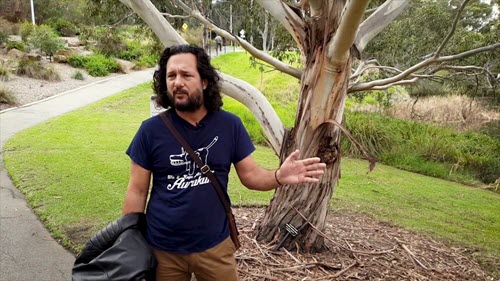
Tyson Yunkaporta

The Monarchy of Fear – A Philosopher Looks at our Political Crisis

Martha Nussbaum’s The Monarchy of Fear is first and foremost a call to think. To think critically, even when it’s uncomfortable. In her own words “Even though it’s hard, it’s important to think and examine options and angles, rather than lazily jumping to conclusions and blaming minorities or women.”. If you do think critically you might think that the title suggests that the book is about fear instead of about thinking and you’d be right. Fear and thinking are closely linked in the sense that it’s hard to think clearly when you are afraid.
In evolutionary prehistory this was useful. When seeing a tiger up close, following fear’s instinctual prompting is much more useful than thinking long and hard and deep until you end up as the tiger’s dinner. In our complicated modern world, however, we can’t rely on instinct. We have to think and think critically.

There is a lot of fear in the world today and most of it is based on real problems like rising real-estate prices, increased costs of health-care and education, the climate-emergency, and the uncertainty about what the impact of AI will be on the job market and the type of work that we do.
These problems are difficult to solve. A lot of studying, modeling, and thinking is required to come up with potential solutions. Implementing these solutions will also take a long time and require that we change the way we live. Even then there is no guarantee that these solutions will indeed resolve the problems they were designed to mitigate.

With so many things to be afraid of and so few easy solutions, it’s comforting to be able to find a “bad guy” who can be blamed for it all. People have a deep-rooted need to feel that the world is just. When it doesn’t present itself in that way pinning blame and punishing the adversary feels like taking back control. When there isn’t really a person or institution to blame it seems very attractive to start “othering” groups like immigrants, religions, women, or the wealthy elites. Fear gets mixed with anger, blame and envy and makes it hard to be empathic. Fear makes us naturally asocial and narcissistic. Add all that together and you can see today’s world emerging.

Unfortunately, aggressive “othering” strategies stop people from thinking and doing useful analysis. Thinking is hard, anger and blame are easy. And they are retributive, seeking to inflict pain in return for the fear a person or group is feeling. This burning desire for payback of perceived wrongdoings is a risk for democracy.
Aristotle discussed fear in a treatise on rhetoric for politicians. In order to persuade people to do what you want, he said, you have to understand how their emotions work, and then you can tailor what you say to their own psychology. To whip up fear politicians should
• Talk about supposedly impending events that are highly significant for survival or well-being;
• Make people think it will happen soon;
• Suggest that things are out of control.
Through this recipe, fear can be manipulated by spreading false information and by phrasing impending events as unavoidable and significant threads. This knowledge can be used for good but it can, of course, also be used with bad intent. This is exactly what’s happening with companies like Cambridge Analytica, who influenced voters through social media campaigns full of lies, tailored to play into their specific fears.

To fight these tactics is hard and it requires a lot of effort and awareness from individuals. We need to all think critically and read widely. Meaning don’t just read what’s offered to you through the echo-chambers of the internet, but also actively look for other sources of reliable information. That’s not just true for “them”, but also for you and me. The echo chamber echos for everyone and adds to our confirmation bias, our natural tendency to dismiss any information that isn’t in line with our previously held beliefs.

Another way to fight the false dichotomies created by fear and misinformation is by being hopeful and spreading messages of hope. People who were able to remain empathic and hopeful in the face of fear and oppression were, for instance, Martin Luther King and Nelson Mandela. Both were able to unequivocally condemn racism without seeing racists as evil or inhumane. Even after 27 years of captivity, Mandela saw the humanity and the will to do good in his oppressors, despite their awful deeds. Most of us don’t possess this level of patience and empathy, but most of us aren’t held captive for 27 years either, so perhaps we can manage to show some empathy and kindness towards someone who is tweeting something you don’t agree with. Although never imprisoned, former president Obama is setting the right example with the most-liked tweet ever: “No one is born hating another person because of the color of his skin or his background or his religion. People must learn to hate, and if they can learn to hate, they can be taught to love, for love comes more naturally to the human heart than its opposite.”

I feel that the topic of this book is incredibly important. The better we understand the mechanisms behind the fear and the anger and the othering, the better we can counter it. Please remember that we have to counter it with patience and love and empathy and not with more anger and othering. You might have every right to be angry about something someone else says or does, but attacking them isn’t going to convince them to change their minds. It’s only going to make them angrier. It’s incredibly difficult, but we have to try to fight anger and hate with love and empathy. Let’s try to help each other to show love and see other people’s humanity. And if you can, read The Monarchy of Fear to get a better understanding of what we’re up against.

Invisible Women

Reading Invisible Women: Data Bias in a World Designed for Men by Caroline Criado Perez was hard. The book is about the patterns of the gender data gap. There are so many that at times reading about them made me feel small and inconsequential. Realizing that large parts of the world are not designed for you, or in some cases are even actively working against you is painful and difficult.
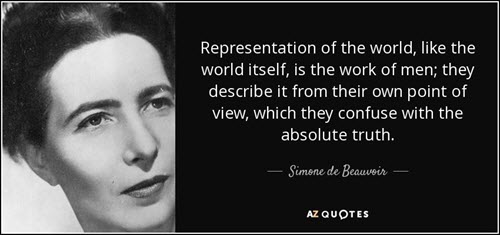
The gender data gap is not malicious. It is the result of a way of looking at the world and documenting it from one particular point of view: that of men. The male perspective has come to be seen as the norm, while the female perspective is seen as a niche. Even though we make up about half of the world population.

The book is filled with examples of where the gender data gap is hurting women. I urge both men and women to read this book. It will change your perspective. At least it did mine. It will also make you more vigilant, which I think is what we all need to be to get to a state where women and our bodies are no longer seen as odd or complicated. After all, we are about 50% of the world’s population.
If I were to mention all the examples in the book, I would be rewriting it. I picked some examples that seemed particularly painful to me.

Crash test dummies, used for testing how car safety and airbags, are 1,77m tall and weigh 76kg. That’s based on the average height and weight of a male body. Women are smaller and lighter on average and are much more likely to sustain serious injuries in a car crash. That’s not because we’re more likely to be involved in serious car accidents, but because cars aren’t as safe for us as they are for men.
In recent years there are some crash tests for which alternate dummies are used, but only in the passenger seat. And the alternate dummy is simply a smaller and lighter version of the male body, so it doesn’t account for having breasts for instance.
This gender data gap is costing lives.

New medicines are usually only tested on men. The reason for this is that women’s bodies might respond differently to medicine depending on their hormone levels. Levels that differ during the month. Because of this testing medicine on women is considered “too complicated”. This is ignoring the fact that once the medicine has been approved for use based on tests on male test subjects women will start using the same medicine. Women’s bodies might respond completely different to the medicine, but these reactions have never been tested.
This gender data gap is costing lives.

The average temperature in an office is based on male bodies and metabolism. It has been scientifically proven that for women to be comfortable the temperature needs to be about 5 degrees warmer. Nobody working in an office will be surprised about this. We’ve all seen men walking around in shirts and women shivering while wearing vests or while hiding under blankets. What’s remarkable is that this is mostly just made fun of and filed under “things women nag about”.

One more, then I’ll stop. Voice recognition systems are trained using large databases of voice recordings. Unfortunately, thanks to the gender data gap, these databases mostly contain male voices. This means that voice recognition systems are trained to recognize male voices. And they do!
These systems are used in more and more places, but a common use is in cars. Using voice recognition instead of using your hands and having to look at buttons or a screen allows for safer driving. Unless it doesn’t work, in which case it might be more dangerous. I’ve experienced this myself (and I have a pretty low voice for a woman). When I had picked up my new car from the garage and was driving home in it I figured I would use voice recognition to call a friend. The system didn’t understand me at all the first few attempts and eventually tried to call someone I really didn’t want to talk to. I nearly crashed trying to abort the call…
Fortunately, the leading voice technology supplier, ATX, has a solution for fixing the issues with women’s voices. According to their vice-president, what women need is “lengthy training” on how to use the voice recognition software. The fact that women aren’t willing to submit to it is their own fault.

Writing this down makes me furious all over again. Research and our surroundings all assume that the default human being is a man. Many of the tools that we use and the places that we visit have forgotten to take half of humanity into account. This is tiring and inconvenient at best but deadly at worst. These are not exceptions. As I said in my introduction, the book is filled with similar examples touching on government policies, pensions, toilets, video games, and language.

It will take a very long time to fix the gender data gap and the resulting biases because they are everywhere. As the use of algorithms increases the problem is likely to get worse before it gets better. This is not an attack on men. We are wired to think that our own experiences mirror those of human beings in general. This is called projection bias. We naturally see ourselves as the center of the world, as we experience the world through our own eyes. There is no way around this. Seeing things differently is hard work. This is true for everybody. And I can imagine that this experience is magnified for white straight men, who constantly see their own experience reflected back to them by the culture in which we live.
The way to fix it is to get more women involved in the designing stage of everything. From software to buildings to policies. After all, women are less likely to forget about women.

Representation of the world