Author Archives: Mirjam van Olst

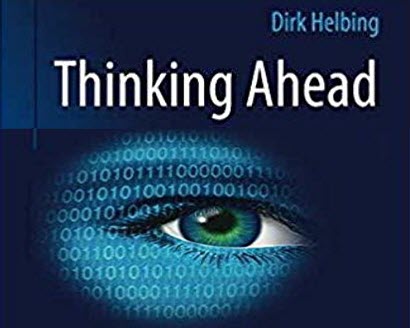
Thinking Ahead – dealing with the impact of increased complexity

Thinking Ahead is a collection of essays on Big Data, Digital Revolution, and Participatory Market Society (co)written by Dirk Helbing. Helbing’s Wikipedia entry is mostly a very long list of achievements and awards in several areas. His interest and expertise run from traffic management to crowd disasters to the risks and opportunities of the digitalizing of the world. The constant is that all these topics are about managing complex systems. The definition of complex systems as used in the book is: “Complex systems are characterized by numerous interacting actors and factors. Examples are social, economic, or traffic systems, as well as the behavior of crowds or ecosystems. The behavior of these systems is often dominated by their internal dynamics. Attempts to control them from outside frequently lead to unexpected and unintended results”.

Complex systems and the financial market
The financial market and crisis are frequently used as an example by Helbing. The global financial market is so complex that it can’t be monitored and controlled anymore. More and more assets don’t have real-world value. It’s almost impossible to understand what is behind these completely virtual assets, which means that we can’t tell whether their value is realistic or if it’s inflated.
Many ideas about the financial market (conventional economic thinking) and how to manage it and keep it from crashing are either outdated or just plain wrong. These ideas don’t take the effect of all systems being connected into account. The fact that globalization has led to more interconnections between financial markets means that the risk of a local problem leading to a global crisis has increased significantly. The resilience of the system is not described by the average stability, but by the weakest link. To be able to isolate risks a system needs compartmentalization and there are no safety points in the financial market today.

The current models for how the financial market will behave is based on the idea that people are completely rational. That we act as “homo economicus” and make optimal decisions.
It turns out that this is not a truthful projection of how humans behave. While some people might take decisions based on purely rational arguments, most people are impacted by emotions. It’s also not true that all people make decisions that are most favorable for them personally. There is not just “homo economicus”, but also “homo socialis”. “Homo socialis” displays other-regarding and cooperative behavior. While older models might suggest that other-regarding behavior is unfavorable in terms of evolution and will therefore eventually disappear, it turns out that this is only the case if a cooperative person is placed amongst a group of selfish people. If a group other-regarding people can stick together it’s the cooperative behavior that gets favored and allows “homo socialis” to spread.

Big Data
Helbing also dives into the challenges and opportunities of “Big Data”. Big Data is a term that has been around for more than 15 years now and it means that data sets are now so big that they can’t be coped with using standard computational methods. Big Data is also referred to as the oil of the 21ste century. It’s worth a lot of money if we can process it. Big Data in itself doesn’t pose a lot of value or risk. We must learn to drill and refine data so we can transform it into useful information and knowledge.

Big Data

While the processing of Big Data offers a lot of opportunities, it also poses a lot of risks. We share information almost constantly, both implicitly and explicitly. Of course, sharing information on social media platforms is explicit. However, by using services like Google Maps we share our whereabouts. By using loyalty systems in the supermarket it’s possible to determine how you live your life and when your life might be changing. Even just browsing the internet we leave behind a telling tale of our lives, our loves, our hates and our opinions.

The way in which information is processed can reinforce patterns. This means that it can reinforce discrimination and promote homogeneity. If that would happen it could of course negatively impact any minority, but it would also be bad for everyone else. Innovation only takes place if people with unique interests and ideas, who are ahead of the curve, can flourish. Filtering out uniqueness would be disastrous for our well-being and economy.

Another challenge is that we can’t really opt out of all of this information sharing. You can decide to not join any social media networks. Web browsers make it possible to turn off cookies, although it means that many web sites become almost unusable. There are tools that support obfuscating your IP address while you are browsing the web, but this still doesn’t guarantee that you are browsing anonymously. And as the number of smart and connected devices is increasing the amount of data that is being collected is exponentially increasing.

Staying in control of data from you or about you is hard, if not impossible. We cannot control what information companies and people collect about us and we cannot control what they will do with the information, or how long they will keep it. Incorrect information about us might also be stored and even spread. This can happen either on purpose or by accident and it’s very hard to correct it.

The European GDPR law has been created to try and protect people from misuse of data from and about them. It forces companies collecting data to be transparent about what data will be used for and it prohibits them from using it for any other means. Once data has outlasted its original purpose it has to be destroyed and if your data is leaked because it wasn’t adequately protected companies will have to pay significant fines.

Conclusion
To me, the book provided a very interesting brain exercise. In the essays collected in Thinking Ahead Helbing does an excellent job of explaining the challenges and risks of globalization and Big Data in a way that’s relatively easy to understand. He also talks about several ideas that might go some way towards limiting risks and providing solutions. None of these ideas will be easy to implement in the real world though and a lot of them will have a significant impact on the lives of many. Based on the book I find it hard to form clear ideas about solutions.
I would personally be interested in exploring some potential solutions a little more and learning about what steps we could take to get closer to a more stable and a more fair world.
Rip Tide – more to it than meets the eye

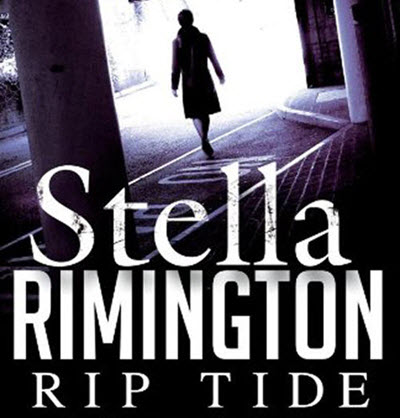
After all the seriousness from the last few weeks, I read Rip Tide by Dame Stella Rimington this week. I love the idea of – and reading about – badass women. Both Stella and Liz Carlyle, the protagonist, fall into that category. Stella Rimington was the head of MI5 before she became a writer. I can’t begin to imagine the obstacles she must have faced to become the head of MI5. I’m sure not everyone was happy to see a woman climb the ranks like that. It must have taken a lot of hard work and perseverance to get there. And she must have been very very good at her job.

I have no idea how good Stella really was as an agent and the head of MI5, but I love her writing. She has written what is so far a 10 part series about Liz Carlyle, who is also an MI5 agent. Rip Tide is the 6th book in the series.
Even though the protagonist is a woman, the books are not just for women. After all, women also read books with male protagonists. If we didn’t it would limit our choice of books to read significantly and we would miss out on many beautiful stories.

Liz comes across as a real woman. There is no over the top drama, she’s not worried about the size of her breasts or the way they might be moving (or not). She does sometimes regret wearing heels, or worries about what to wear to not stand out and feel uncomfortable at particular events or places.
I love Liz’s empathy and her concern for other people’s wellbeing and the way in which we see her struggle when her values clash with the responsibilities that are part of her job.

In Rip Tide, a charity’s ship is being attacked by pirates of the coast of Somalia. It’s the third time pirates try to take one of their ships and its crew hostage. Is it a coincidence or is there more to it? One of the pirates is not like the others. He doesn’t communicate with the other pirates. What’s his story?

All the Liz Carlyle novels are enjoyable and exciting from start to finish. They are easy to read and there is enough tension to not want to put the book down, but it’s not so tense that you are afraid of what you’ll discover if you read on.
I highly recommend all Liz Carlyle books, including Rip Tide. For those new to the series, the first book is At Risk.

Stella Rimington

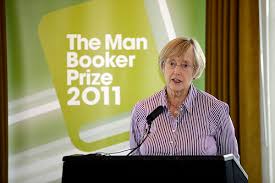
Stella Rimington was the chair of judges of the Man Booker prize in 2011 and her speech describes some of the interesting dynamics around that role.
It’s almost impossible to just pick one snippet from it, so I’ll just share the start. You can find the full speech at the Man Booker Prize web site.

“Well – I thought the intelligence world was the place for intrigue – but that was before I met the publishing world.
Since our shortlist was announced we’ve seen black propaganda, de-stabilisation operations, plots and double agents – worthy of the KGB at its height.”

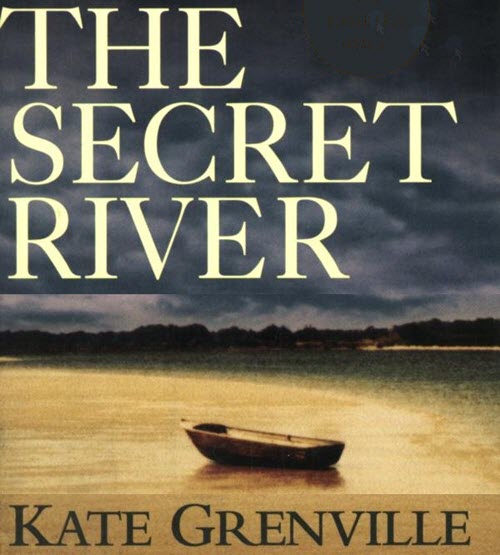
The Secret River – how a lack of understanding can lead to a disaster

The Secret River is loosely based on the story of Kate Grenville’s ancestor Solomon Wiseman, but it’s a work of fiction.
It’s incredibly well written. The book tells the story of William and Sal and it feels heavy from start to finish.
William and Sal meet as kids in London. William has a big family with a lot of brothers and sisters. There isn’t enough food for everyone and he’s often cold. Sal’s an only child and her family is a bit better off. William and Sal end up being some of Australia’s early settlers.

Usually, when reading I try to identify with one of the main characters. In this book, I’m on the outside looking in. None of the characters are very likable. I felt sorry for them, but at the same time, they don’t seem to handle their circumstances very well. It’s easy to say that while being sat on a comfortable sofa with tea and a biscuit of course.

In a way, the book shows the worst sides of humans. There is a total lack of empathy for other classes and people with a different background and culture. Those in a position of power treat the people that need their kindness and support the most with contempt. As they gain power people behave like their former oppressors, even though they are aware of how that behavior hurt them in the past. They take the full force of their self-loathing out on others.
Throughout the book decisions and actions lead to crashes in slow motion. With horrible consequences. While it’s easy to see it happening from a distance it does make me wonder if I would be able to see it happening if this was my life and these were my decisions and actions.

The Secret River is a strong reminder of how important it is to be open to other people and to try and understand what’s driving them. The characters in the book are unable to truly connect and reach each other and shame and entitlement is stopping them from really trying. It’s painful to watch.
The more different people seem to be at first glance, the harder it can be to connect. We should look for ways to communicate and not give up because it’s hard. We shouldn’t feel embarrassed because we are trying and not succeeding the first time.
This is a reminder for myself as much as anyone. Especially being prepared to try to connect, fail and try again. It’s ok to be uncomfortable and as today’s world is becoming smaller and more diverse it might be more important than ever.

The Secret River made me feel some of the painful history of Australia. It also made me realize while I learned about the facts of Dutch colonization, I have little awareness of the feelings and the emotions that must have been part of it. The violence, pain, and injustice.
I want to find a book like The Secret River that can teach me about the pain and injustice that are part of my own past.

I learned about The Secret River through this Youtube video.
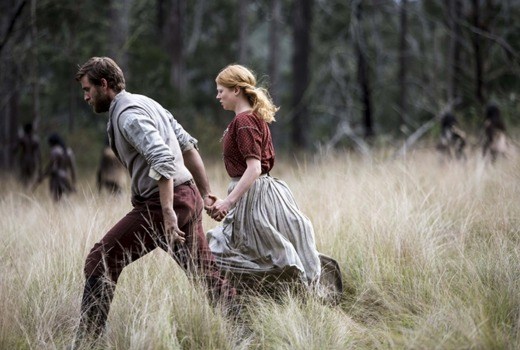
If you are lucky enough to have an Australian iTunes account I think the Secret River mini-series will be well worth a watch.

The Secret River

Macbeth – A tale of ruthless ambition

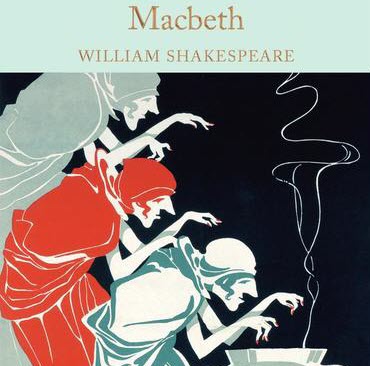
Macbeth is the second Shakespeare play that I read. Before I tried, I didn’t think I’d be able to understand, let alone enjoy Shakespeare. Last year I visited Shakespeare’s Globe during a weekend trip to London. I found these cute little books from the Macmillan Collector’s Library that didn’t seem too daunting, so I decided to try one. Some of the words look a bit different, but often reading out loud will make it easier to understand.

The books in this series start with an extensive introduction, which explains the outline of the story. There’s also an overview of the names and roles of the most important characters in the play. With names like Macbeth, Macduff, and Malcolm this is helpful.

Macbeth is a story about how ambition and greed can make ordinary people become violent and ruthless. It’s called the Scottish play, as most of it is set in Scotland and focuses on the fight for the Scottish crown.
Macbeth is a general in King Duncan’s army. When three witches tell him that he will one day be king Macbeth’s ambition gets the best of him. He decides not to wait for “one day” and takes matters into his own hand. At first, Macbeth is hesitant about killing, but Lady Macbeth is ruthless and even asks the spirits to fill her with cruelty.
After having killed the roles are reversed. Macbeth develops a taste for it while his wife is being consumed by guilt and slowly loses her mind.

There is a lot of violence and death in the book, but the most heartbreaking part is when one of the noblemen has to deliver the news of the death of Macduff’s wife and children to him in England.
“Let not your ears despise my tongue for ever,
Which shall possess them with the heaviest sound
That ever yet they heard”

Needless to say that the writing is beautiful. It’s easy to be so focused on the story that you forget to pay attention to the beautiful sentences. There are several parts of the book that I read multiple times because I wanted to focus on the beauty of the prose rather than just read and understand the story. I know that I’m a couple of centuries late to this party, but I feel it’s worth noting as there might be more non-native English speakers who shun away from Shakespeare, thinking it will be too difficult to read. It’s doable and worth the effort!

By the pricking of my thumbs, something wicked this way comes

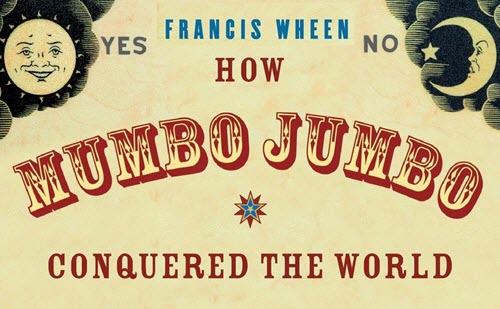
How Mumbo-Jumbo Conquered the World

I expected to just read this book by Francis Wheen as a reference (and therefore for it to be a bit boring). I thought it would be like a Ben Goldacre book, super interesting, but not necessarily written to entertain a large audience.
The beginning of the book is almost the opposite. I was immediately absorbed in it and couldn’t put it down. It’s much more Harari than Goldacre.
The book is not just interesting though. It’s also devastating and if the news today isn’t enough to make you feel like we’re screwed, this book might do it.

Wheen starts out by explaining The Enlightenment or the Age of Reason. This is a movement that started in the 17th century and was based on the idea that “rational inquiry leads to objective truth”.
After this upbeat start of the book, Wheen uses the remainder of the book to show how the humane values of the Enlightenment have been abandoned since 1979. 1979, incidentally, is the year in which I was born but I promise I had nothing to do with this betrayal of reason.

The late 20th-century movement that rejects objective facts, science, reason, and logic is called post-modernism. The movement was popular among progressives and made it a hip thing to talk nonsense and be as vague as possible. Few progressives who didn’t subscribe to this epistemic relativism dared to criticize it for fear of being ridiculed. This feeling was justified as it’s almost impossible to argue against bogus ideas if notions of truth and falsity no longer have any validity. It’s scary and depressing that this seems to be just as relevant today and that we still haven’t found a way to counter it.

What shocked me is the totality with which the world has seemed to reject reason. World leaders whom I have looked up to all my life (even if I might not have agreed with some or even most of their policies) turn out to have been enthusiastic believers in the power of mumbo-jumbo. If world leaders fall for the charms of charlatans, it’s not hard to imagine that entire communities can fall under their spell.
The personal beliefs of these world leaders have led to a lot of spending of public resources and money on all sorts of nonsense and to vulnerable people being exploited.

Man once surrendering his reason has no remaining guard against absurdities

I expected the book to mostly be about alternative medicine and spiritual beliefs, but a lot of it is focused on economic mumbo-jumbo. The book describes examples of how the west in general, and the US and the UK in particular, have used and are using their power to extend their own power and wealth and to slow down the growth of developing nations. Leaders like Thatcher and Reagan were among the first firm believers in the “trickle-down” effect”, meaning that when the rich get richer, they will share their wealth with the poor, without intervention through taxes and the government. I don’t think anyone still believes this today. The gap between the rich and poor is increasing at an ever greater speed and the further the poor fall behind, the harder it becomes to catch up.

Wheen also explains how the stock markets have gone crazy, especially over internet start-ups. A company nowadays can be worth many millions on the stock exchange without having made any profit and in some cases without realistically being expected to ever do so. As in this case value is literally “in the eye of the beholder” that value can also be diminished if people decide to start selling their shares. This means that people and companies trading stocks can gain a lot of money in a short amount of time, but they can lose it just as easily.

History shows that most people are unable to believe that a large group of people would follow someone who would use violence to oppress opponents, people of a certain race or of a different religion. Even when it happens right under our noses it’s very hard to believe it. Until it’s too late. We all think we wouldn’t fall for it and things will work out in the end. After all, we can clearly see that Stalin, Hitler and Pol Pot were despots. Surely we are able to spot the next one coming along and prevent similar atrocities from happening again. Unfortunately, we are too gullible and because of that at risk of letting history repeat itself.

If you are willing to have your mind blown and if you think you are able to stomach reading all about how mumbo-jumbo conquered the world I’d urge you to read this book. It provides an eye-opening background story to recent history and hopefully if enough people become aware we can work together on a more reasonable future.