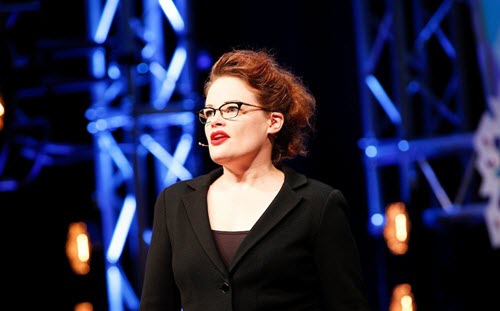
Author Archives: Mirjam van Olst

The War for Kindness – Building Empathy in a Fractured World

I feel very strongly about kindness and empathy. I always try to be kind, even when I’m tired and in a hurry and I don’t feel like it. I don’t always succeed, but I always try. When I learned about a book called The War for Kindness – Building Empathy in a Fractured World I immediately knew I wanted to read it.
Jamil Zaki is a professor at Stanford University who has been studying how empathy works for many years and he wrote this book about his most important findings.

The first time I started thinking about empathy was after hearing David Foster Wallace’s commencement speech “This is Water”. I realize there are serious problems with David Foster Wallace’s legacy, but the speech is so powerful I still want to quote it. The speech is about making a conscious decision to think about what you’re thinking, instead of just living your life on autopilot. Many of us are like the young fish described at the start of the speech. And the people in the supermarket. And the people stuck in traffic.
If I’m in a more socially conscious liberal arts form of my default setting, I can spend time in the end-of-the-day traffic being disgusted about all the huge, stupid, lane-blocking SUV’s and Hummers and V-12 pickup trucks, burning their wasteful, selfish, 40-gallon tanks of gas, and I can dwell on the fact that the patriotic or religious bumper-stickers always seem to be on the biggest, most disgustingly selfish vehicles, driven by the ugliest [responding here to loud applause] — this is an example of how NOT to think, though — most disgustingly selfish vehicles, driven by the ugliest, most inconsiderate and aggressive drivers. And I can think about how our children’s children will despise us for wasting all the future’s fuel, and probably screwing up the climate, and how spoiled and stupid and selfish and disgusting we all are, and how modern consumer society just sucks, and so forth and so on.
 
You get the idea.
 
If I choose to think this way in a store and on the freeway, fine. Lots of us do. Except thinking this way tends to be so easy and automatic that it doesn’t have to be a choice. It is my natural default setting. It’s the automatic way that I experience the boring, frustrating, crowded parts of adult life when I’m operating on the automatic, unconscious belief that I am the center of the world, and that my immediate needs and feelings are what should determine the world’s priorities.
 
The thing is that, of course, there are totally different ways to think about these kinds of situations. In this traffic, all these vehicles stopped and idling in my way, it’s not impossible that some of these people in SUV’s have been in horrible auto accidents in the past, and now find driving so terrifying that their therapist has all but ordered them to get a huge, heavy SUV so they can feel safe enough to drive. Or that the Hummer that just cut me off is maybe being driven by a father whose little child is hurt or sick in the seat next to him, and he’s trying to get this kid to the hospital, and he’s in a bigger, more legitimate hurry than I am: it is actually I who am in HIS way.

Our feelings and emotions are not determined by what happens to us. They are determined by how we react to what happens to us. I try to always keep this in mind and actively practice it. People who I think of as assholes who are in my way don’t think about the world with me at the center of it in the way I do. They, by definition, experience life and the world around them with themselves at the center of it all. They might have very good reasons for behaving in the way they do. They might be very annoyed by my behavior, even if I didn’t mean to annoy anyone, or if I had a very good reason for behaving the way I did.
I know for a fact that I’m sometimes annoying for the people close to me because whenever they complain about others I try to come up with suggestions about why the people they are furious at behaved the way they did. Which is, of course, the last thing you want to hear when you are trying to blow off some steam.

In the book, Zaki describes how empathy’s most important role is to inspire kindness. It triggers us to help others, even at a cost to ourselves. This cost is worth it, both on a personal and an evolutionary level.
If many humans weren’t willing to help others we would not exist and certainly not thrive as a species. Human baby’s and kids are helpless for much longer than most other species’ offspring. They need their parents and community to take care of them, despite the cost of energy, time and money.
A personal benefit of empathizing is that it will help us to attract friends. We like people who empathize with us. Decades of evidence show that people who empathize with others have more friends and experience greater happiness.

I don’t just try to execute my quest for kindness and empathy in my personal life. I also extend it to my professional life. I work hard on building a culture that makes people feel appreciated and safe. Where leaders are kind and enable their teams to learn and grow and use their potential. Even if that potential is greater than that of the leader itself. We should reward people for achieving great things together, for helping each other and for leveraging everyone’s strengths.

Zaki’s research confirms that this is a good strategy. Organizations that focus on kindness flourish, even when it comes to the bottom line. In 2012, Google found that its people-oriented teams were also their most successful teams.
For several decades people have believed that the best way to motivate employees is by offering them bonuses for individual excellence. While this may motivate some people, most people feel unhappy in an environment in which they constantly have to outdo their colleagues. It generates anxiety, fatigue, and hostility. It limits results and increases attrition. A rewards system that promotes cooperation, on the other hand, increases morale and productivity.

The second person who has influenced my thinking about empathy is Tim Minchin. This also started with his commencement speech in which he shares 9 life lessons. Number three is about empathy and being humble.
Remember, It’s All Luck. You are lucky to be here. You were incalculably lucky to be born, and incredibly lucky to be brought up by a nice family that helped you get educated and encouraged you to go to Uni. Or if you were born into a horrible family, that’s unlucky and you have my sympathy… but you were still lucky: lucky that you happened to be made of the sort of DNA that made the sort of brain which – when placed in a horrible childhood environment – would make decisions that meant you ended up, eventually, graduating Uni. Well done you, for dragging yourself up by the shoelaces, but you were lucky. You didn’t create the bit of you that dragged you up. They’re not even your shoelaces.
 
I suppose I worked hard to achieve whatever dubious achievements I’ve achieved … but I didn’t make the bit of me that works hard, any more than I made the bit of me that ate too many burgers instead of going to lectures while I was here at UWA.
 
Understanding that you can’t truly take credit for your successes, nor truly blame others for their failures will humble you and make you more compassionate.
 
Empathy is intuitive, but is also something you can work on, intellectually.

Tim Minchin’s idea that you can practice being empathic is in line with David Foster Wallace’s idea about actively thinking about what you are thinking about and it’s supported by Zaki’s research results.
A century ago, scientists were convinced the adult human brain was fixed. That it couldn’t grow or change. This also meant the assumption was that character and behavior was fixed. That it couldn’t be trained or adjusted. If you weren’t kind or empathic that was just who you were.
Part of who we are and how we behave is genetically determined. Studies have shown that empathy is about 30% genetically determined. For generosity, this is 60%. I guess that explains why my mum could have bitter discussions with my grandma about who was allowed to buy the other person dinner and why I have very similar discussions with my mum today.

If 30% of empathy is genetically determined this still leaves a lot of room for improvement through experience, training, and education. Our actions, inactions and life’s choices make a real difference. Education grows the brain, while stress causes atrophy. Empathy is a skill that you can improve on just like math, running, and weightlifting. People might start at different base levels, but their competency is by no means fixed.

Training to be empathic can be done by simply thinking about what you’re thinking. Feeling empathy is easier for someone you know personally than for the abstract concept of a group or a tribe. Especially if you don’t belong to that particular group. If you hate a specific group of people, getting to know someone from that group and being treated with kindness by that person can in some cases change your mind about the entire group. In the words of Mark Twain “Getting to know people and traveling is fatal to prejudice, bigotry, and narrow-mindedness, and many of our people need it sorely on these accounts”.

People feel more empathy for others when they understand what they are going through. You can learn about other people and their circumstances in many different ways, but nowadays it can most realistically be experienced using Virtual Reality. Experiments show that people who have experienced a refugee camp through VR are more empathic towards refugees and are also willing to donate more money for relief efforts even months after their VR experience.

Actors pretend to be other people, which means that they have to think about what the person they are pretending to be thinks and feels. This is a form of practicing empathy. It’s therefore not surprising that students who train to be actors don’t only develop their acting talent, but also their empathy.
Reading and acting can be a way to practice empathy in safe environments, without judgment. Storytelling doesn’t just provide joy and amusement, it can also make people kinder!

I’m so fascinated by the impact that empathy can have and how you can learn to be more empathic that I could go on and on about it. I empathize with you, the reader though. I realize you have other (better) things to do besides reading this blog.
I do ask you to read or listen to David Foster Wallace’s speech and think about its contents.

If you are interested in empathy Jamil Zaki’s book is a very worthwhile read. In this post, I only touched upon a tiny little part of the topics that he discusses. If you are a parent, a caretaker, or if you work in medicine in one capacity or another the book contains some valuable insights that aren’t obvious. At least they weren’t to me.

Empathy is the mental superpower that can overcome the distance between two people. Empathy is personal, but it’s also collective. We are herd animals. We behave in the way we see people around us behaving. We observe others and copy parts of what they do and think. You only have to look at local accents to realize that this is true. Fortunately, we don’t just respond to norms, we also create them. Setting examples of kindness and empathy helps to let other people be more kind and emphatic too. Let’s create a trend together.


The Geneva Trap – excitement and beautiful scenery

I’ve read The Geneva Trap by Stella Rimington this week. It’s the seventh book in the Liz Carlyle series and like the previous six, it didn’t disappoint. Liz is a tough and smart woman who works for MI5. She doesn’t let the men who work for any security agencies intimidate her. Using her wits and her intuition she plays an important role in solving the cases that she is involved in.

In The Geneva Trap, Peggy Kinsolving gets to play a bigger role than in the previous books in the series. Peggy has a background as a librarian. She joined MI6 after responding to a job advertisement because she was looking for a little bit more action than what she got in the library.

After working on a case with Liz Peggy transferred to MI5 and the two have worked together ever since.

I always assumed that the character of Liz Carlyle was based on Dame Stella, who is a former head of MI5. However, after listening to a podcast with Dame Stella, I feel that both Peggy and Liz were designed to resemble parts of their creator.

Reading the Liz Carlyle books is very relaxing during the week, but it generates more stress on Saturdays when I try to write my blog post.  There is not much to say about the book that I haven’t mentioned when writing about other books from the series. I also don’t want to give away any details about the story.

I, of course, recommend reading the book, as all Liz Carlyle novels are worth reading. I also recommend going to Lake Geneva. In this book, the main role of the lake is as a dumping place for dead bodies. In real-life though it’s absolutely stunning. Geneva is a nice city, but if you drive around the lake (or take a train) you’ll come across views that are breathtaking.

I was lucky enough to do a couple of days of consultancy work for a company that has its head office in Lausanne. The office has a rooftop terrace that looks out over the lake. The view was stunning. However difficult it is to do computer work in the sun, the inconvenience would be more than compensated by the inspiration that the view from that terrace would provide.

I also had the opportunity to visit the Montreux Jazz Festival once. We were there for the Prince concert, but for me, the highlight of the trip was the view from the balcony of the hotel room and the walks along the lake. (The concert was great, it just wasn’t as memorable as the views of the lake were for me.)

Montreux
Photo by Spencer Harbar, Triumph Media Limited

That’s enough holiday destination advertisements for one week I reckon. I’ll make sure to read a book that leaves me with more to write about next week.

Women in Tech – hopeful stories and helpful advice

I started reading Invisible Women by Caroline Criado Perez and it made me feel so insecure and anxious that I had to put it away for a while. It’s a testament to how important that book is but I still need to function, so I’ll read that in bits and pieces.
To counter the negativity I needed something upbeat, but as the feminist theme was still resonating strongly I chose a book by Tarah Wheeler on Women in Tech. I’ve been following Tarah on Twitter for a while and I think she is incredibly cool. I can try to explain here, but I won’t be able to do her justice, so just check out her feed yourself.

The book was a good choice. It’s not just positive stories (it can’t be when talking about women in tech), but it’s hopeful and kind. And as I’ve been a woman in tech for the last 20 years there are no earth-shattering surprises in the book to throw me off balance.
Writing this post was hard though. There are so many things in this book that I can relate to and that I would have liked to share a story about that I could have written a book about the book. I have tried not to, but this post still ended up being quite long.

The book is written as a chronological career in tech. It starts by talking about applying for jobs in the tech industry, covers some specifics about several different types of jobs that you can have in the industry, talks about your brand, about mentoring and being mentored and finally about moving into a leadership position in a tech company or even starting your own company.

The book starts with the shocking revelation that since I was born, the percentage of women working in computer science and achieving computer science degrees has decreased. This means that despite tech companies desperately looking for women to diversify their teams most women are still choosing a different career path. The reasons for this are numerous and a lot of them are hard to resolve.
One of the reasons is the unconscious bias of teachers, parents and eventually inevitably of girls themselves that math, physics, and technology are for boys. It’s in the wording and images that we use and in the way that we think about stereotypes for people in these fields.
Another important challenge is the lack of role models. I was lucky because my mum was a computer programmer. This was never discussed as being remarkable at home which means that for me the image of a woman working as a technologist was normal and natural. Most girls don’t have role models like that though and on TV and in books these roles are often still played by boys with floppy hair and glasses.

People also often feel like you need to be “special” to be able to succeed as a software developer or as a systems engineer or a security expert (or hacker). When I was still a developer myself people would often comment that “I must be really smart then”. You don’t need a special brain to be able to be successful in technology. If you are willing to work hard and you like puzzles (and I know a lot of women and girls who like puzzles) you are already half of the way there.

Tarah and her co-authors are very open about their successes as well as their failures in the book.
One of the lessons that she learned when moving into leadership roles is that you need to shift your approach. As a woman in tech, you’ll be spending quite some time making sure people see that you are good at what you do, that you belong. You’ll have to be more vocal about your achievements than what comes naturally to most women. As you move into a leadership role you need to adjust this. You shouldn’t be out to prove that you are the smartest person in the room. Instead, you should attempt to create an environment in which your team feels that they are smart and capable to allow them to do their best work. In this, she touches on one of my favorite topics of this moment; using the full capability of your teams by being a multiplier of their energy and intelligence. (For more information check out Multipliers by Liz Wiseman.)

The story of Kamilah Taylor, one of the co-authors, also resonated with me. Kamilah is a software engineer at Linked-In (at least at the time of writing the book) and has an MS in computer science and robotics.
She talks about the pressure of representing a minority (in her case 3 minorities) in a field. As you move up the ladder in your career people will inevitably start to look up to you. This is a great feeling and very reaffirming, but it also ups the stakes. It starts to feel like if you fail, you don’t just fail for you. It feels like you are letting down all the other women in your company or even in tech. Making a mistake or things not working out as you wanted gets a lot of extra weight.
This can work as a powerful motivator, but it also adds more stress that you need to cope with.
I feel this too. Occasionally I strive for things because I feel it will set a good example, rather than because it’s something that I genuinely care about.

The stories in Women in Tech are valuable and easy to relate to and the book is a very enjoyable read. What amazed me is the invitation that Tarah extends several times in the book to reach out to her personally for advice or help. It’s inviting and powerful. I’d be scared to do this as in my experience of writing a relatively successful tech blog, sharing your ideas makes people feel entitled to a lot of your time and energy anyway. On the other hand, as a lot of them will feel entitled you might as well invite the people who’d otherwise not feel comfortable enough to reach out.

The main thing that I took away from the book other than the pleasure of reading it, is to be even more aware of my unconscious biases. Being open-minded, thinking critically and constantly examining your own ideas and assumptions is what will allow us to grow as a people and even as a species. Find both the similarities and the differences between you and everyone else and use empathy to relate and connect.

Tarah Wheeler

So Long, and Thanks for All the Fish

This book has the nicest and most on point prologue I remember reading. It’s almost worth getting the book just for the prologue.

So long, and thanks for all the fish is the fourth book in the Hitchhiker’s guide to the galaxy series. If you haven’t read the previous three it’s probably a good idea to start at the beginning, as there is some order in the chaos of traveling through the Galaxy. I do feel like the books are getting better with each one that I read, so if you can’t get into it right away it’s worth it to keep going.

Eight years after Arthur Dent was abducted by Vogons, which was seconds before the earth was destroyed to make room for a new hyperspace bypass, he’s back on earth. On earth, only a couple of months seem to have passed and Arthur has decided to slip back into his old life. This is surprisingly easy, as people have extraordinarily short memories.
There is one problem though. Arthur is not the same person he was eight years ago. Eight years of wandering across the Galaxy and experiencing all sorts of craziness alters your brain. Mind you, even ordinary experiences can alter our brains, so Arthur’s experience is hardly surprising.

Science has proven that once you have learned something new you can never go back to the way you were before that. You can’t even remember what it was like to not know this new thing that you learned. This makes it so hard for us normal people to have empathy for those around us who don’t already know what we now know. Arthur’s problem isn’t so much that he doesn’t have empathy, he would just like the Universe to stop doing whatever it’s doing to him.

I love all the funny and quirky references to science and the human condition in the book. You can enjoy the book without even noticing them but for me, they are the witty icing on the cake of a fun story. For example about confirmation bias and the fact that we have to apply critical thinking rigorously.
“He felt a spasm of excitement because he knew instinctively who it was, or at least knew who it was he wanted it to be, and once you know what it is you want to be true, instinct is a very useful device for enabling you to know that it is. ”
We shouldn’t just think critically about what others think and say, but we should also be critical of our own thoughts and intuition. We often see what we want to see and explain situations to fit our pre-existing narrative.

On his travels, Arthur meets a scientist who calls himself Wonko the Sane. He calls himself “the Sane” because so many people think that he’s crazy. He’s smart though and he says “You can’t possibly be a scientist if you mind people thinking that you’re a fool.”.
The world in general and social media more specifically make this even worse. Scientists are being called many names that are much worse than crazy for trying to share their knowledge with the rest of the world.

I admire the scientists who are able and willing to continuously endure this kind of abuse. You must be passionate about science and sharing what you learned to do that.
In a next life, I would like to be a scientist. I didn’t think this through but that’s ok because I don’t believe in a next life. It allows me to dream all I want.
I would find the abuse very hard to deal with, but I would love to work on discovering new things that would make the world a better, prettier, safer or nicer place. This is heavily romanticized, but it feels like it would be a wonderful way to make a difference to the world and the people on it.

Taking the work out of networking – a bit

When I decided to read Taking the work out of networking, I hoped that Karen Wickre had some sort of magical solution to make networking fun for those of us who don’t like going to events to meet a lot of people that we don’t know.
I’m what is apparently called an “extroverted introvert”. I like people and I like having conversations with them, but in small doses and for limited periods of time. I prefer dinner with a small group over a large event. It allows for more in-depth and meaningful conversations.

The book doesn’t reveal a magic formula that would allow me to avoid networking. Wickre, also classifying herself as an introvert, describes all the ways in which she manages and maintains her large network. She is so active connecting to people that I caught myself thinking “she can’t possibly be an introvert and want to do all of that all the time!”. I don’t know her, of course, and I don’t know how she lives her life so I have no way of knowing that. She probably has a different way to strike a balance and manage her energy.

The book describes networking at events as well as online networking via LinkedIn and Twitter. Although I’m already reasonably active on social media it was this part of the book that resonated most with me.
Before I read the book I decided whether to accept or ignore a LinkedIn connection request based mostly on how well I know the person who sent the request. Wickre has a good point though that if you are looking for career opportunities or for information on a certain topic, that your weak ties are probably going to be most valuable to you. People who you know well often have a lot of the same connections that you do. People who you don’t know well are more likely to add something different to your network. This makes sense, so I have changed my attitude related to deciding who to connect with on LinkedIn.

In the book, Wickre also talks about keeping your network warm by regularly sending messages to people to let them know that you are thinking about them and that you value them as a connection. She does this by for instance sharing a link to an article that you think they might find interesting. This is a bridge too far for me, but it did inspire me to put a recurring item on my todo list to connect with people I haven’t spoken to for a while. I try to reach out to one person per day. After only one week I can already tell that I won’t meet my target of one person per day, but if I reach out to two or three people per week that’s already two or three more than I would otherwise have reached out to.
To be clear, these are people that I’ve been thinking about anyway and that I would love to catch up with. Even though time and energy are limited it feels good and valuable from a personal point of view to reconnect with them.

Even though the book doesn’t contain any miracles to avoid networking or magic spells that can turn you into an extrovert the book did give me a just forceful enough nudge to get me to make some changes and take some action.
The book also mentions the film The Intern, which is one of my favorite films to watch on a plane, so it gets extra points for that too.

The Intern